DPP Consultations – clarify requirements before making decisions
The Digital Product Passport is not a single, universal obligation.
The scope and implementation approach of DPP differ depending on the industry, product type, and the company's role in the supply chain.
In practice, this means:
• producer obligations differ from importer or private label obligations,
• timelines and data scope vary for each industry,
• publicly available information is often generalized or inconsistent.
Therefore, DPP preparation should start with proper interpretation of requirements, not with system selection.
The Axelote team actively participates in DPP standards work – including PKN KT 342 and industry information exchange networks – which means consultations are based on the current state of regulatory work and implementation practice.
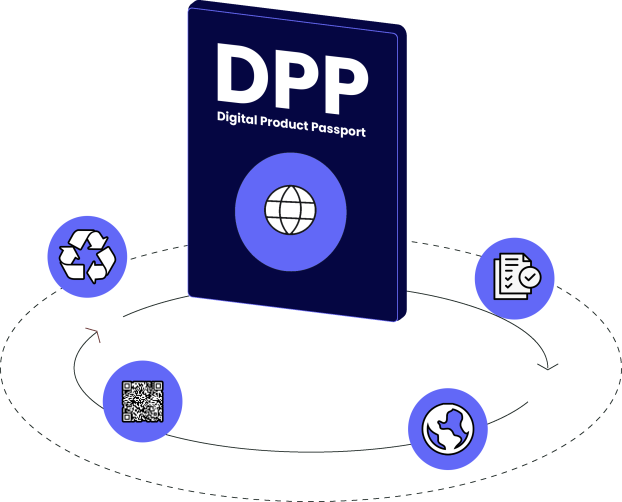
What does the DPP consultation process look like:
Initial questionnaire (2–3 minutes)
A short questionnaire helps determine:
• industry and company role (producer / importer / private label),
• product scope,
• initial level of data and process readiness.
The questionnaire enables preparation of consultations precisely tailored to your situation.
Consultation tailored to your organization
During the meeting:
• we verify whether and to what extent DPP applies to your company,
• we discuss specific obligations resulting from regulations for your industry,
• we identify gaps and risks.
Interpretation and priorities
We explain:
• what is required currently,
• what will be required in subsequent stages,
• which actions have real business significance.
Recommendations and next steps
After the consultation, you receive:
• a clear picture of the situation,
• a recommended sequence of actions,
• a basis for further organizational and technological decisions.
DPP Consultations – individual approach to real obligations
The Digital Product Passport is not a "one size fits all" solution.
The scope of obligations, level of complexity, and implementation approach of DPP differ depending on the industry, product types, and the company's role in the supply chain.
Don't wait – start with the initial questionnaire and book a consultation tailored to your company.
What does an Axelote consultation give you?
Get your DPP in order before the regulator does it.
FAQ - Is your company ready for DPP?
Does the Digital Product Passport apply to my company?
Short answer: very likely, yes.
Why: DPP covers producers, importers and distributors in the EU – especially in industries such as textiles, toys, electronics, furniture or construction products.
If you sell physical products in the EU – DPP is on your map.
When will DPP become mandatory?
Short answer: deadlines are phased, but preparations must start now.
Why: regulations come in waves, differently for each industry. Companies that wait for "a specific date" usually start too late.
Is DPP just IT?
Short answer: no.
Why: DPP is data, processes and systems. IT is a tool, but without organized product information and business decisions, nothing will work.
Does DPP have anything to do with ESG, ESRS, EUDR?
Short answer: yes – a lot.
Why: DPP will become one of the main data sources for ESG reporting, ESRS compliance and raw material origin tracking (EUDR).
Do I need to have everything ready at once?
Short answer: no.
Why: DPP is implemented step by step. First you organize data, then processes, finally systems and integrations.
Why is there such information chaos around DPP?
Because:
regulations are new and still being refined,
each industry has a different timeline,
law, IT and business speak different languages.

Stay up to date
Subscribe to our newsletter to receive the latest updates


